
What a root canal actually is
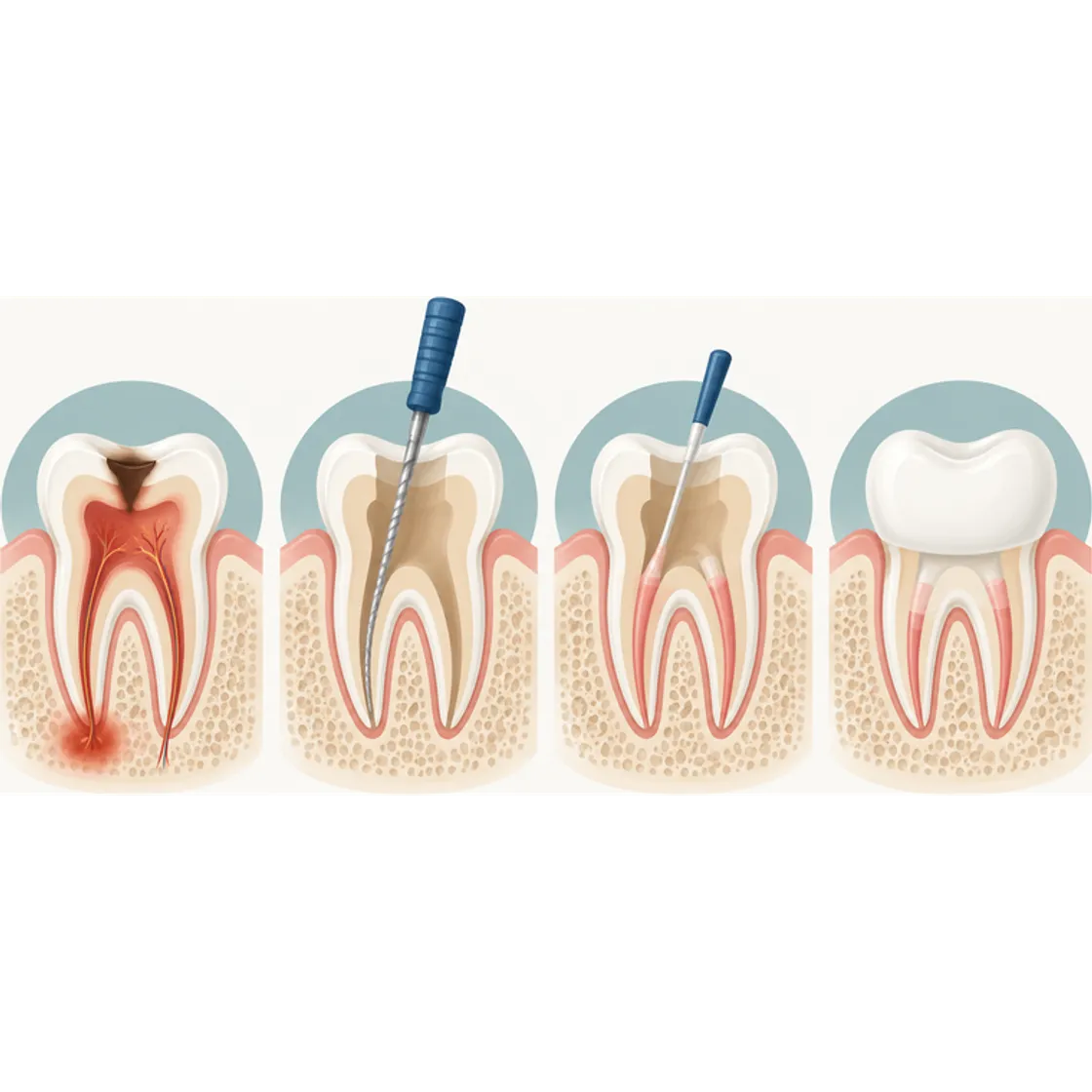
Inside every tooth is a soft core of nerve and blood vessels. If decay or a crack lets bacteria reach it, that tissue becomes infected, and because it is sealed inside a hard tooth the pressure has nowhere to go. That is the pain people describe as throbbing and impossible to ignore.
A root canal removes the infected tissue, cleans and disinfects the canals inside the root, and seals them. The tooth stays in place and keeps working.
The reputation comes from the days before modern anaesthetic. The appointment itself is done numb. It is the infection that hurts, not the treatment.
Signs a tooth may need one
- Pain that wakes you at night
- Pain that lingers after something hot or cold
- A tooth tender to bite on
- Swelling of the gum near a tooth
- A tooth that has darkened
- A pimple-like bump on the gum
What happens at the appointment
-
An x-ray
To see the roots and confirm what is happening below the gum, because the surface rarely tells the story.
-
Numbing
Nothing starts until the tooth is fully numb.
-
Cleaning the canals
The infected tissue is removed and the canals are disinfected and shaped.
-
Sealing
The canals are filled to stop bacteria getting back in.
-
A crown
Usually needed afterwards, particularly on back teeth, because a root treated tooth becomes brittle.
Who you will see
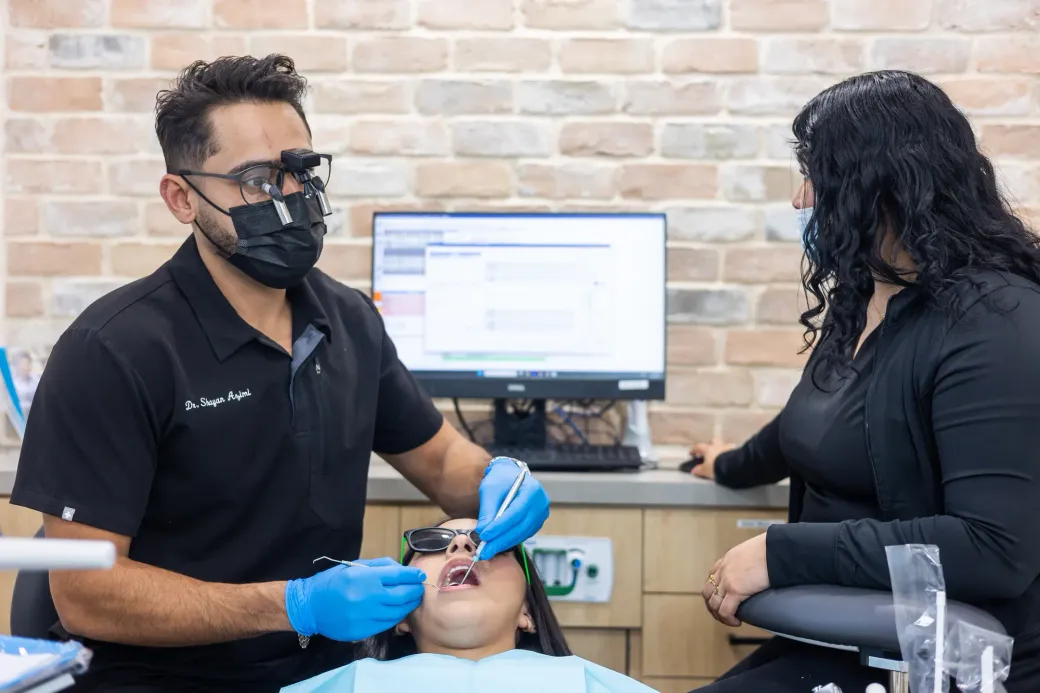
Dr. Shayan Azimi looks after root canal treatment at our Bishop Arts practice. You see the same dentist at every visit, so nobody starts your treatment over.
What it costs, and how people pay
Price depends on what you actually need, so we look first and tell you the number before anything starts. What we can tell you now is how it gets paid for.
- Insured. In network with most major PPO plans, and your benefits get checked before treatment is planned.
- Medicaid or CHIP. Both accepted, which a lot of Dallas practices will not do.
- No insurance. Our membership plan covers cleanings, exams and routine x-rays from $30 a month, with 20% off other treatment.
- Larger treatment. Cherry, Sunbit and HFD payment plans spread the cost.
Root Canal Treatment questions
- Does a root canal hurt?
- The treatment is done under local anaesthetic and should not hurt. The pain people associate with root canals is the infection beforehand, which is exactly what the appointment removes.
- Is it better to pull the tooth instead?
- Almost never, if the tooth can be saved. Extraction leaves a gap that then needs an implant or a bridge, which costs more and takes longer than saving what you already have.
- How long does a root canal take?
- It depends on which tooth and how many canals it has. Front teeth are quicker than molars. You will be told what to expect for your tooth once the x-ray has been taken.
- Will I need a crown afterwards?
- Usually, especially on back teeth. Removing the nerve leaves the tooth more brittle, and a crown protects it from splitting.